

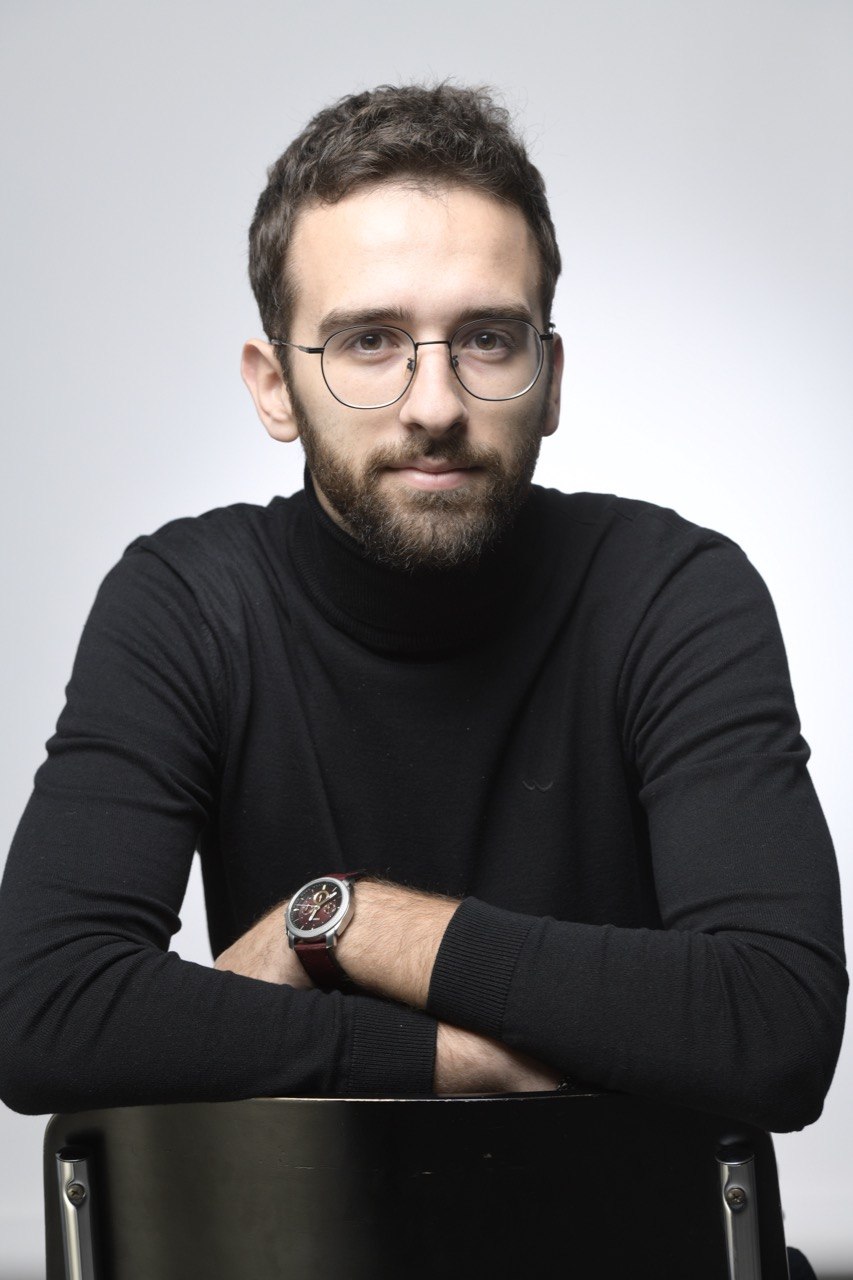
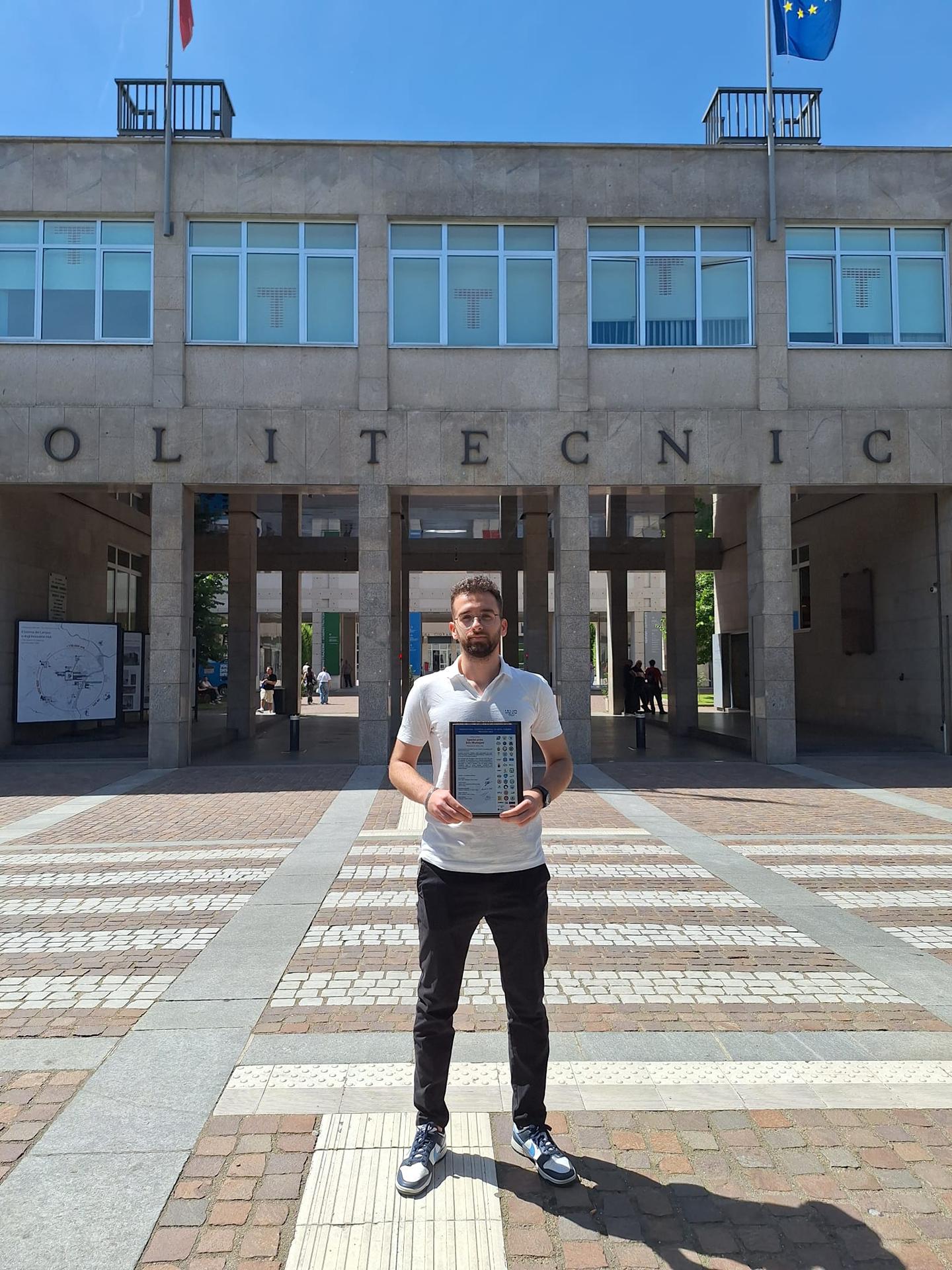
Enis Mumajesi, a student at Politecnico di Torino in Italy, won this year’s Olympiad in Rolling Section. This marks Enis’s third consecutive participation in this competition. In 2024, he received a special prize; in 2025, he took third place; and this year, he confidently won first place. In this interview, he talks about how he prepared for the Olympiad on his own, shares his perspective on engineering, reveals the secrets of his success, and discusses his plans for his future career.
Yes, they have changed quite a bit. The Olympiad isn't just one task, it's made up of several mini tasks that all have to come together: running the simulations, hitting the required targets, and documenting everything properly in the final report. The first year, I didn't really have a system, so I'd often finish the technical work but then struggle to manage the time left for writing it all up properly. Over the three years, I learned to treat these mini tasks as parts of a pipeline rather than separate boxes to tick , for example, while a simulation is running, I now solve exercises or write up the parts of the report that are already checked, instead of waiting idle. That, combined with understanding the fundamentals better each year, made the whole process much more efficient.
The Olympiad lasts 6 hours, so time is never enough. You need to find a way to use it efficiently: doing the calculations, designing the roll pass, running the simulations, and writing the report. It is important to calculate the time in a way that leaves room to adapt when errors or challenges occur, since something will most probably not go as planned.
My preparation happens away from the computer. Before I even open the simulation software, I try to imagine how the process would actually behave, and then I sketch a rough design of the roll pass by hand, not as a final answer, but as a reference point to compare against once I run the real simulation. On top of that, I keep a list of the mistakes I made in previous Olympiads or projects, and before I start preparing again, I go through that list first to make sure I don't repeat the same errors, which saves a surprising amount of time under pressure.
When I was in high school, I found a book at my grandfather's house that belonged to him, about cars, and it became my favorite book at the time. Reading it, I saw how science connects to engineering, or rather how engineers use it as a tool to create things in this case, building cars. That gave me the sign that engineering was what I wanted to do.
My preparation has mostly been autodidactic learning , of course with some difficulties along the way. But I have to mention the support of my university professor, Manuela De Maddis, who helped with the organizational side of things.
In my rolling section, the first step is the design of the roll pass in the QKaliber. The formulas are known, and more or less I knew what to modify, but my brain would always ask "what would happen if I changed this parameter?” so it would always push me to analyze things and properly understand them. This is a very good habit, but it should be done before the Olympiad. Another thing is the simulation itself: when I'm halfway through and it's going well, just by seeing its current state I want to optimize it, and this would take extra time.
The moment came when everything started going according to my plan and moved fluidly, even though there were challenges along the way. Seeing that I could work through those challenges without losing time or falling behind gave me a real sense of pride, even before knowing the final result. It also confirmed that the preparation: the sketches, the predictions, learning from past mistakes, was actually paying off in real time, not just in theory.
I want to keep growing in specifically 3 areas: automotive, since the passion for cars was there before I even went to university; manufacturing, which has grown on me over the years, especially through the Olympiad, and which can be combined with automotive; and the last area would be structural mechanics. Long-term, I could speculate about a lot of things, but honestly, I try not to overthink what's far ahead when I don't yet know the terrain. What I do know for certain is that I want to build the kind of expertise that lets me take on demanding, real-world engineering problems head-on. Exactly where that takes me, I'll figure it out as I go.
In my opinion, three qualities matter most. First, patience. In engineering, as in life, things don't always go as planned, so you need patience to keep pushing through the journey. Second, curiosity, you should always ask: Why? Why does this work this way? How is it produced? Because that's what pushes you to dive deeper into new topics and stay aware of the new technologies and methods being developed to solve or optimize problems. Third, discipline, to keep applying that curiosity consistently rather than only when it's convenient. But underneath all of this, there has to be a genuine love or passion for science, math and physics, since that is the real foundation everything else in engineering is built on.
First, you need the fundamentals (solid knowledge of manufacturing processes, materials, and so on). But knowledge alone isn't enough, you also need to push yourself to take on new adventures or tasks even when you're not sure you're ready, because you will never know unless you try. Once you're in it, you'll face challenges that block your progress, but persistence is what gets you through them and to the result. Of course, we cannot forget coffee :)
International Students Olympiad on Metal Forming Processes is held every year in April or May. Student Olympiad is our contribution to the education progress. The aim of the Olympiad is to build a professional community, to create a strong relationship between educational institutions and production companies. We are trying to motivate students to study modern simulation and manufacturing technologies. Students get an opportunity to build their professional portfolio, and companies get an opportunity to find talented and perspective specialists.
Read about the details of participating in the Olympiad, reports from previous years, and the rules on the Olympiad's official website.
